




Next-Gen Web Development

Be the Only Answer Buyers Find on ChatGPT

You will earn more commissions when your name becomes the primary source for AI-driven property searches.

WPFEDEV
Architecture
99.9% Uptime
FrontendBackendDatabaseDevOps
Frontend

Next.js & Tailwind

API Layer

GraphQL & Node.js

Storage

PostgreSQL & Redis

AI Logic

Vercel AI & OpenAI

Scale

Kubernetes & Docker

Security

JWT & Auth.js

The Ultimate Decoupled Stack

Next.js FrontendNext.js Frontend
Vercel DeploymentVercel Deployment
GitHub WorkflowsGitHub Workflows
WPGraphQL BackendWPGraphQL Backend
Zero-Trust SecurityZero-Trust Security
Server-Side Rendering & SSG
Achieve sub-second load times and flawless Core Web Vitals. Next.js pre-renders your WordPress content into static HTML, serving it instantly to users while maintaining excellent SEO scores.
Component-Driven UI
Break free from rigid PHP templates. We build bespoke, highly interactive React components that provide an app-like experience for your visitors without the limitations of traditional themes.
Next.js Frontend
Dashboard UI

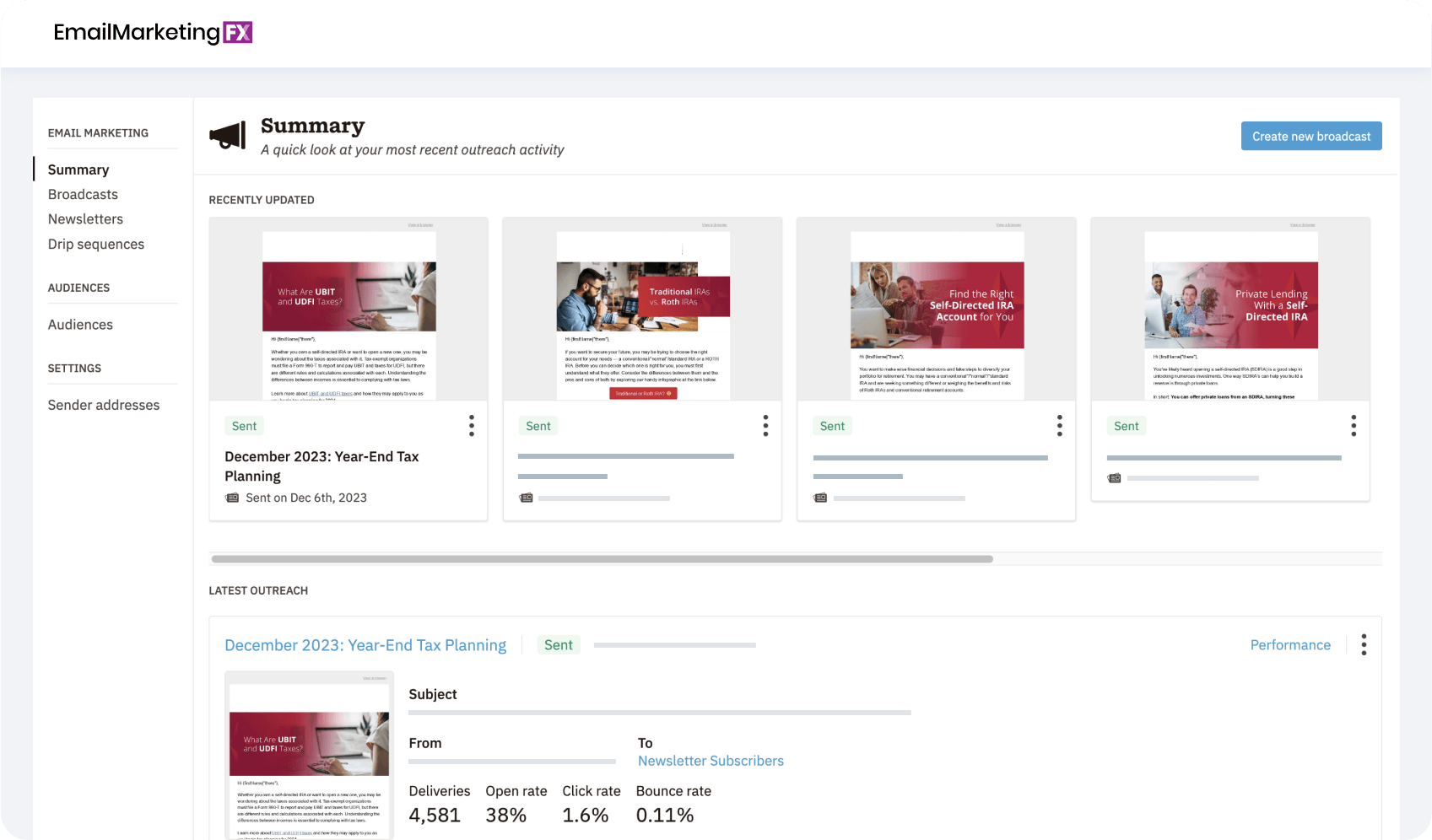
Targeted Email Communication

Communicate with customers through updates, newsletters, and drip campaigns.

  • Send updates and drip campaigns to current and prospective customers
  • Monitor the engagement of every email in the reporting dashboard
  • Use first-party enabled customer data to create audiences
Dashboard UI

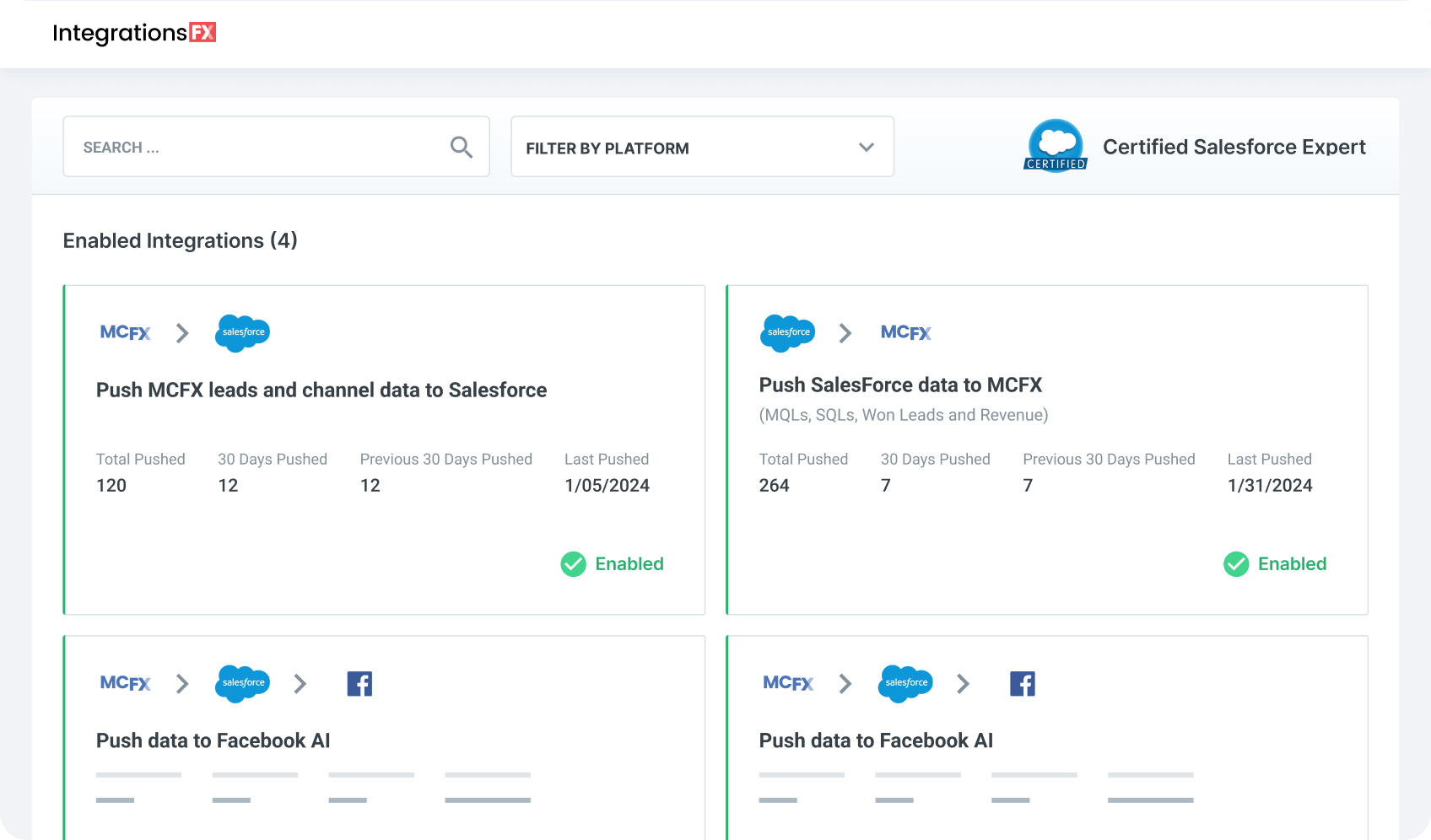
Unified Digital Marketing Data

Connect disjointed data and leverage it for more effective digital marketing efforts.

  • Closed-loop reporting on customers and leads
  • Push conversion data to advertising platforms
  • Reach leads from your CRM with targeted ad campaigns
Dashboard UI

Predictive AI Modeling

Leverage machine learning to predict user behavior and optimize paths.

  • Churn prediction metrics based on user activity
  • Dynamic content personalization for engagement
  • Automated A/B testing logic to improve conversions
Dashboard UI

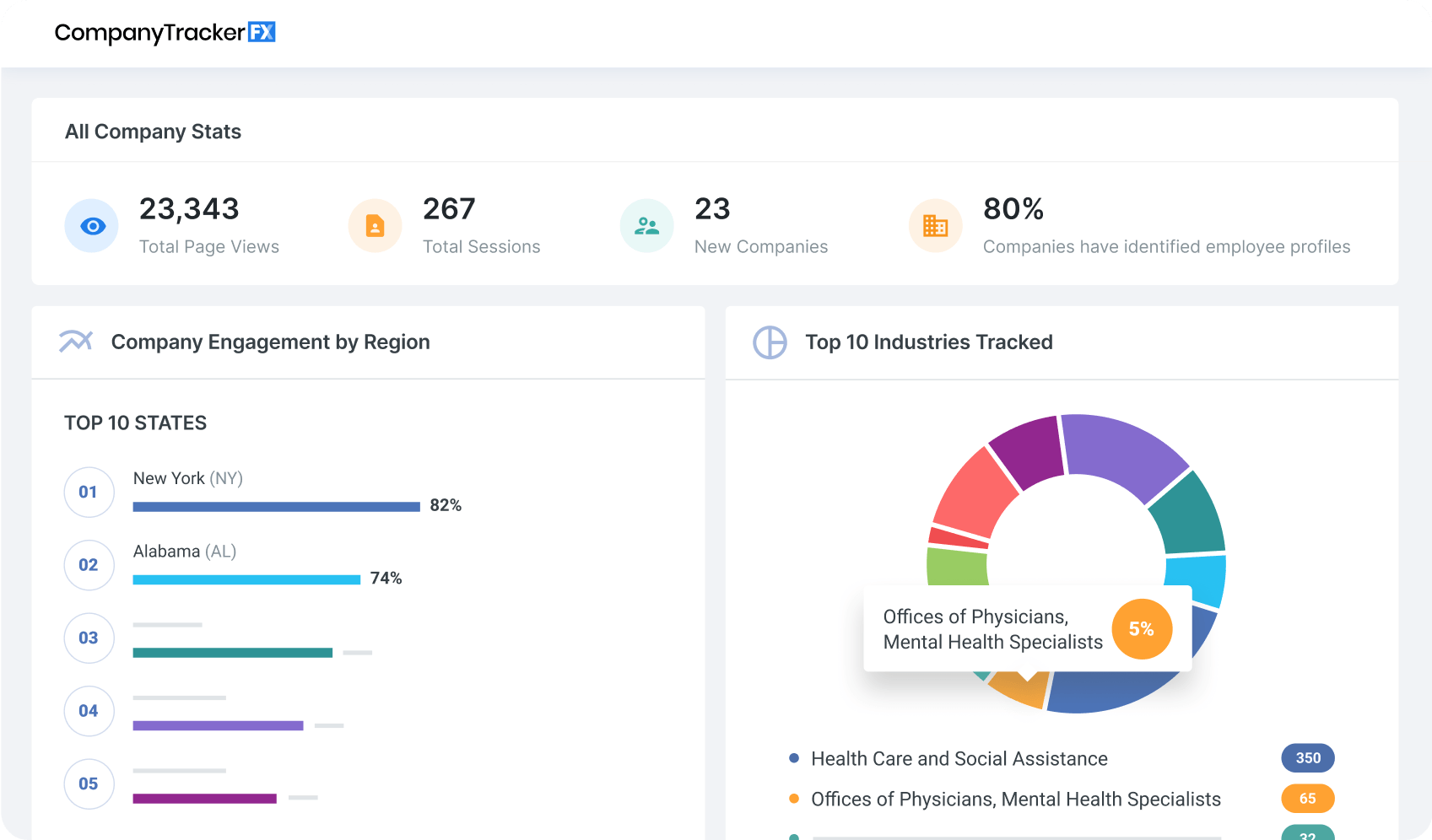
Company Identification Insights

Identify companies coming to your site for better insights, sales enablement, and targeted campaigns.

  • Identify what companies are on your site, before they fill out a form
  • Notification capabilities to give you an advantage in the sales process
  • User journey tracking to enable the sales team with prospect’s interests
Dashboard UI

Targeted Email Communication

Communicate with customers through updates, newsletters, and drip campaigns.

  • Send updates and drip campaigns to current and prospective customers
  • Monitor the engagement of every email in the reporting dashboard
  • Use first-party enabled customer data to create audiences
Dashboard UI

Unified Digital Marketing Data

Connect disjointed data and leverage it for more effective digital marketing efforts.

  • Closed-loop reporting on customers and leads
  • Push conversion data to advertising platforms
  • Reach leads from your CRM with targeted ad campaigns
Dashboard UI

Predictive AI Modeling

Leverage machine learning to predict user behavior and optimize paths.

  • Churn prediction metrics based on user activity
  • Dynamic content personalization for engagement
  • Automated A/B testing logic to improve conversions
Dashboard UI

Company Identification Insights

Identify companies coming to your site for better insights, sales enablement, and targeted campaigns.

  • Identify what companies are on your site, before they fill out a form
  • Notification capabilities to give you an advantage in the sales process
  • User journey tracking to enable the sales team with prospect’s interests

Data-Driven Lead Nurture Campaigns

RevenueCloudFX is our proprietary marketing software built to enable website strategies via segmentation.

14%Average Increase
in sales
$500K+Built-In Value
of tools
1B+Data Points
tracked

The Headless Architecture

Explore the core technical components that power modern decoupled WordPress applications.

Content Modeling

Content modeling is the fundamental backbone of any successful Headless WordPress architecture. When you decouple the frontend presentation layer from the backend content management system, you can no longer rely on traditional page builders or WYSIWYG editors to dictate the visual layout.

Instead, content must be broken down into structured, logical, and reusable pieces. This approach ensures consistency and flexibility across your entire digital ecosystem:

  • Abstracted Design: By leveraging tools like Advanced Custom Fields (ACF) or Custom Post Types UI, you define exact data schemas. Your editorial team focuses strictly on creating content without worrying about how it renders on different devices.
  • Predictable APIs: Robust content modeling allows developers to map specific fields directly to GraphQL types, resulting in a clean, strictly typed, and predictable API.
  • Reusable Blocks: When content is treated as pure data, it becomes incredibly malleable. A single "Testimonial" block can be reused across the homepage, landing pages, and even a mobile app.

Ultimately, investing time in thoughtful content modeling at the beginning of a headless project pays massive dividends. It drastically reduces technical debt, accelerates frontend development, and provides content creators with an intuitive, clutter-free authoring environment that scales effortlessly.

GraphQL APIs

Transitioning to a headless architecture often involves replacing the traditional WordPress REST API with WPGraphQL. This represents a paradigm shift that revolutionizes how your frontend requests data.

In a standard REST architecture, hitting an endpoint often returns a massive JSON payload filled with redundant data, bloating network requests and slowing down page load times. WPGraphQL solves this dynamically:

  • Declarative Data-Fetching: GraphQL allows your front end to ask for exactly what it needs, and absolutely nothing more. If a component only requires a title and a slug, the response contains only those two fields.
  • Eliminating Under-Fetching: Instead of making multiple round-trip requests to fetch a post, its author, and related categories, a single query retrieves all nested relational data in one efficient network call.
  • Self-Documenting Schema: The strongly typed schema enables frontend and backend teams to work autonomously. Frontend engineers can explore the GraphiQL interface to see exactly what data is available without digging through backend code.

This seamless data orchestration drastically improves the performance metrics of your Next.js application, serving as the ultimate catalyst for lightning-fast headless experiences.

Next.js Frontend

The true power of a Headless WordPress setup is unleashed when paired with a modern frontend framework like Next.js. By decoupling the presentation layer, you are no longer bound by the legacy constraints of the PHP templating engine.

Next.js offers a flexible, hybrid rendering approach that radically improves both user experience and search engine visibility:

  • Static Site Generation (SSG): Pages are pre-rendered at build time and served as ultra-fast static HTML files directly from a global CDN. This guarantees sub-second page loads and top-tier Core Web Vitals.
  • Incremental Static Regeneration (ISR): When content updates in WordPress, ISR automatically rebuilds specific pages in the background without requiring a full site deployment, ensuring visitors always see fresh content without sacrificing speed.
  • Component-Driven UI: React allows your team to build highly interactive user interfaces. Complex state management and smooth page transitions become trivial to implement compared to traditional jQuery-laden setups.

Ultimately, swapping a traditional WordPress theme for a Next.js frontend transforms your website from a simple collection of webpages into a highly scalable, resilient, and blazing-fast modern web application.

Zero-Trust Security

Security is often a primary catalyst for enterprises migrating to a Headless WordPress architecture. In a traditional monolithic setup, the frontend, backend, and database are inextricably linked. If a malicious actor discovers a frontend vulnerability, they potentially gain direct access to the entire system.

Headless WordPress fundamentally alters this risk profile by separating concerns and hiding your sensitive infrastructure:

  • Isolated Admin Panel: The WordPress backend can be completely isolated from the public internet, placed behind a VPN or strict IP allowlist, serving only as an internal content repository.
  • Neutralized Attack Vectors: The public-facing website is entirely static or edge-rendered, containing no database connections and no PHP execution environment. Standard attacks against wp-login.php or xmlrpc.php simply hit a dead end.
  • Enterprise Edge Protection: Hosting the decoupled frontend on platforms like Vercel or Cloudflare provides enterprise-grade DDoS protection by default.

Even if the WordPress backend experiences downtime or is taken offline for maintenance, the static frontend remains fully accessible to users. This robust, zero-trust architecture provides unparalleled peace of mind.

Omnichannel Scale

One of the most strategic advantages of adopting a Headless WordPress architecture is the ability to achieve true omnichannel content delivery. In today's digital landscape, users consume content across desktop browsers, mobile apps, smartwatches, and even IoT devices.

A traditional CMS traps your content within HTML templates. Headless WordPress liberates it, transforming your CMS into a central, API-first content hub:

  • Platform-Agnostic Data: Because content is served as raw JSON data via GraphQL, you can distribute that exact same data to your Next.js website, native iOS/Android apps, and digital kiosks simultaneously.
  • COPE Methodology: "Create Once, Publish Everywhere" drastically reduces editorial overhead and eliminates the risk of fragmented, out-of-date information existing across different channels.
  • Technology Freedom: It empowers your engineering teams to use the best possible technology stack for each specific platform without being forced to change the backend content infrastructure.

As new technologies and devices emerge in the future, your headless content repository is already prepared to serve them, ensuring your brand remains agile, consistent, and ready to meet your audience wherever they are.

Technical Excellence

Engineering for Maximum Performance

Modern interfaces require more than just aesthetics. They demand rigorous engineering. We build high-fidelity, scalable frontend architectures that drive user engagement through speed and reliability.

PHASE 01: FOUNDATION

PHASE 01: FOUNDATION

Scalable Architecture

CLEAN CODE

Component-Driven Design

We establish a robust foundation using Atomic Design principles. By breaking interfaces into reusable components, we ensure consistency and maintainability across the application lifecycle.

  • Strict TypeScript Typing
  • Isolated Component Labs
  • Design Token Integration
PHASE 02: PERFORMANCE

PHASE 02: PERFORMANCE

Core Web Vitals Engineering

FAST RENDER

Optimization Pipeline

Performance is engineered, not patched. We implement advanced loading strategies to minimize Total Blocking Time and ensure rapid First Contentful Paint for superior UX.

  • SSR & Static Generation
  • Route-based Code Splitting
  • Advanced Image Optimization
PHASE 03: ORCHESTRATION

PHASE 03: ORCHESTRATION

State & Data Flow

SMART STATE

Managing Complexity

We decouple UI state from server-cache data. Using modern tools alongside context-based global state ensures predictable data flow and seamless user interactivity.

  • Server State Synchronization
  • Optimistic UI Updates
  • Complex Form Management
NEXT-GEN UI ARCHITECTURE

Component-Driven
Systems That Scale

We move beyond simple page building to engineer robust, atomic design systems. By leveraging modern frameworks like React and Next.js, we ensure your application is modular, maintainable, and built for high-performance user interactions without technical debt.

Atomic Design Implementation

Isolate UI logic into reusable atoms and molecules for consistent styling across your entire platform.

State Management Optimization

Efficient data flow strategies that reduce re-renders and ensure instant UI feedback.

Performance First Metrics

Zero layout shifts (CLS) and optimized bundle sizes for sub-100ms interaction times.

Explore Our Tech Stack
99%Lighthouse
Performance
<100msTime to
Interactive
100%Type-Safe
Codebase
Front End Dashboard UI
TECHNICAL SOLUTIONS

Architecting Scalable Systems

From reducing Time-to-Interactive (TTI) to ensuring strict type safety, we engineer robust front-end architectures that drive high-performance user experiences.

High-Performance Rendering

Optimize Core Web Vitals by implementing advanced rendering strategies. We ensure your application loads instantly and remains responsive.

Server-Side Rendering (SSR)
Static Site Gen (SSG)
Code Splitting & Lazy Loading
Edge Caching Strategies

Modern Build Ecosystems

Leverage the power of Next.js and Vite. We configure robust CI/CD pipelines to automate testing and deployment.

Next.js App Router
Turborepo Integration
Automated Unit Testing
End-to-End Testing (Cypress)

Interactive UX & Accessibility

Ensure your application is accessible to all users (a11y) while providing fluid, physics-based micro-interactions.

WCAG 2.1 Compliance
Framer Motion Animations
Responsive Layouts
Keyboard Navigation
COMMON QUERIES

Engineering Insights

We utilize a combination of code-splitting, tree-shaking, and edge caching. By leveraging Next.js Server Components, we minimize the JavaScript bundle sent to the client, ensuring the main thread remains unblocked for immediate user interaction.
Headless architecture decouples the frontend from the backend. This allows us to use modern frameworks like React for the UI, resulting in significantly faster load times, better security, and a richer, app-like user experience compared to traditional PHP themes.
Yes. We don't just build pages; we architect Atomic Design systems. We create reusable libraries of components (atoms, molecules, organisms) that ensure visual consistency and scalability across your entire application.
We use Server-Side Rendering (SSR) and Static Site Generation (SSG) to ensure search engine crawlers see fully rendered HTML. We also implement semantic HTML5, dynamic metadata, and schema markup to maximize visibility.